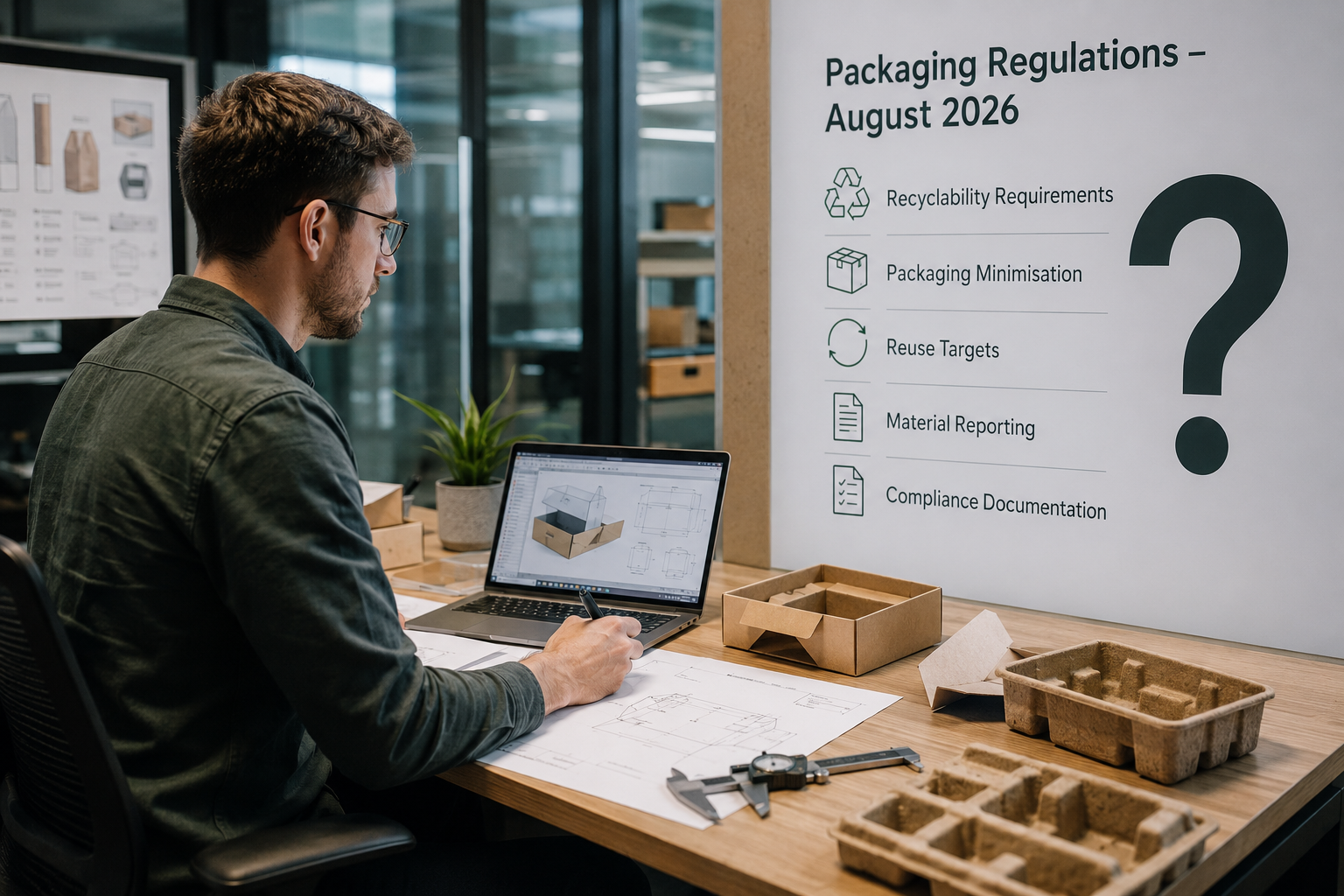
PPWR 2026: Why Packaging Proof Will Matter More Than Packaging Claims

For years, companies have focused on making packaging more sustainable. Recyclable materials, reduced plastic use, and eco-friendly messaging have become standard elements of modern packaging strategies.

However, from 12 August 2026, a major shift will take place across Europe.

With the application of the Packaging and Packaging Waste Regulation (PPWR), businesses will increasingly need to demonstrate that their packaging complies with specific requirements through documentation, testing, and technical evidence.

In other words, sustainability claims alone will no longer be enough. Companies will need proof.

What Is Changing Under PPWR?

The new PPWR introduces requirements designed to improve packaging sustainability, recyclability, and transparency throughout the supply chain.

The regulation will impact manufacturers, brand owners, importers, distributors, and packaging suppliers operating within the European market.

While implementation details will continue to evolve, several key principles are already clear.

Declaration of Conformity

Each packaging type will need to be supported by a Declaration of Conformity.

This documentation is intended to demonstrate that the packaging complies with applicable European requirements and can be made available when requested by customers or authorities.

For many businesses, this represents a significant shift toward greater accountability and traceability.

PFAS Restrictions for Food-Contact Packaging

PFAS substances have become an increasingly important topic within packaging regulations.

Packaging intended for food contact will need to comply with the applicable PFAS restrictions and limits established under European legislation.

As a result, companies should review their packaging materials and work with suppliers that can provide transparency regarding material composition and compliance.

Recyclability Will Need to Be Demonstrated

The PPWR places strong emphasis on packaging recyclability.

Packaging should not only be designed with recycling in mind but should also be capable of meeting the relevant recyclability criteria.

This means businesses may need access to technical data, material specifications, and supporting evidence to demonstrate compliance.

Minimization of Packaging Materials

Another important principle of the regulation is packaging minimization.

Weight, volume, and material usage should be reduced to the minimum necessary to ensure product protection, functionality, and logistics performance.

This encourages smarter packaging design while helping reduce unnecessary waste throughout the supply chain.

Technical Documentation Matters

One of the most significant changes introduced by PPWR is the increased importance of technical documentation.

Companies may need to support their claims with:

  • Material specifications
  • Compliance declarations
  • Test reports
  • Recyclability information
  • Technical assessments
  • Supplier documentation

Having this information readily available can help businesses respond efficiently to customer requests and regulatory requirements.

Market Expectations May Arrive Before Enforcement

In many cases, large retailers, brands, and procurement teams are likely to begin requesting compliance information before the regulation is fully enforced in practice.

As sustainability requirements become part of supplier qualification processes, documentation may become a competitive advantage rather than simply a regulatory obligation.

Businesses that prepare early may find themselves better positioned to meet future customer expectations.

Looking Ahead

The PPWR marks a transition from sustainability claims to demonstrable sustainability.

From 2026 onward, packaging decisions will increasingly be evaluated not only on cost, design, and delivery performance but also on compliance, transparency, and evidence.

Companies that invest today in compliant materials, PFAS-free solutions, recyclability, and robust documentation will be better prepared for the future of packaging in Europe.

At Pakeling, we believe that successful packaging is no longer just about what you say—it is about what you can prove.

Let us know how we can help.

Name

Eco-Friendly Advantages of Paper Bags

**Eco-Friendly Advantages of Paper Bags**

In recent years, there has been heightened awareness regarding the impact of non-biodegradable materials on the environment. This awareness has catalyzed a significant shift towards using more sustainable materials, particularly in the packaging industry. One such material that has gained substantial recognition for its eco-friendly properties is paper. Paper bags offer a range of environmental benefits that make them a preferred choice over plastic alternatives. This article explores the various eco-friendly advantages of paper bags.

### 1. **Biodegradability and Compostability**
– **Natural Breakdown**: Paper is composed of organic fibers, which means it can break down naturally over time. Unlike plastic, which can take hundreds of years to decompose, paper bags decompose within a few months.
– **Composting**: Paper bags can be composted in both home and industrial compost facilities. When composted, they turn into nutrient-rich compost that can enrich soil, contributing to a circular economy.

### 2. **Reduced Carbon Footprint**
– **Lower Energy Consumption**: The production of paper bags generally requires less energy compared to plastic bags. The raw materials for paper bags come from renewable resources – trees, which absorb carbon dioxide during their growth.
– **Carbon Sequestration**: Forests act as carbon sinks, absorbing more carbon dioxide than they emit, which helps in offsetting the carbon footprint associated with manufacturing paper products.

### 3. **Renewable Resource**
– **Sustainable Forestry**: Many paper containers are made from trees harvested from sustainably managed forests. The practice of planting more trees than are cut down ensures that the paper production process does not deplete natural resources.
– **Recycling and Reusability**: Paper bags are easily recyclable and can be reused multiple times before they reach the end of their lifecycle. Recycling paper reduces the demand for virgin materials and cuts down on the energy and resources needed for manufacturing.

### 4. **Reduction in Plastic Waste**
– **Plastic Pollution**: Plastics pose a significant threat to marine and terrestrial ecosystems due to their non-biodegradable nature. Paper bags, by offering a viable alternative, play a crucial role in reducing plastic waste.
– **Microplastic Avoidance**: Plastic bags break down into microplastics, tiny plastic particles that contaminate waterways and the food chain. Paper bags, being biodegradable, do not contribute to this form of pollution.

### 5. **Lower Toxicity**
– **Safer Decomposition**: As paper bags decompose, they do not release toxic chemicals into the environment. In contrast, plastic bags can release harmful substances that persist in the ecosystem for long durations.
– **Eco-friendly Inks and Dyes**: Many paper bags are printed with water-based inks and dyes, which are less harmful to the environment compared to the solvent-based inks used in plastic bag production.

### 6. **Economic Incentives**
– **Job Creation**: The paper bag industry supports sustainable forestry and paper recycling programs, creating jobs that contribute to the green economy.
– **Market Demand**: Consumers are increasingly opting for eco-friendly products, encouraging businesses to align with sustainable practices, and fostering a market for greener alternatives.

### 7. **Enhanced Consumer Awareness**
– **Brand Perception**: Businesses that use paper bags often enjoy a positive brand image as consumers perceive them as environmentally responsible. This can enhance customer loyalty and attract eco-conscious buyers.
– **Educational Opportunities**: The shift to paper bags also creates opportunities for educational initiatives on waste reduction, sustainability, and the importance of choosing eco-friendly options.

### 8. **Improved Aesthetic and Functional Qualities**
– **Customization**: Paper bags can be easily customized with a variety of designs, colors, and logos, making them an attractive choice for branding and marketing.
– **Durability**: Modern paper bags are designed to be strong and durable, capable of carrying significant weight and standing up to various use conditions.

### Conclusion
The shift to paper bags represents a small but significant step towards a more sustainable future. The advantages of using paper bags extend far beyond their functionality, encompassing significant environmental, economic, and social benefits. By choosing paper bags over plastic alternatives, individuals and businesses can contribute to a reduction in carbon footprints, decreased plastic pollution, and support for sustainable resource management. As we collectively move towards more eco-friendly practices, the widespread adoption of paper bags can play a vital role in protecting and preserving our planet for future generations.

How can we help?