For years, companies have focused on making packaging more sustainable. Recyclable materials, reduced plastic use, and eco-friendly messaging have become standard elements of modern packaging strategies.
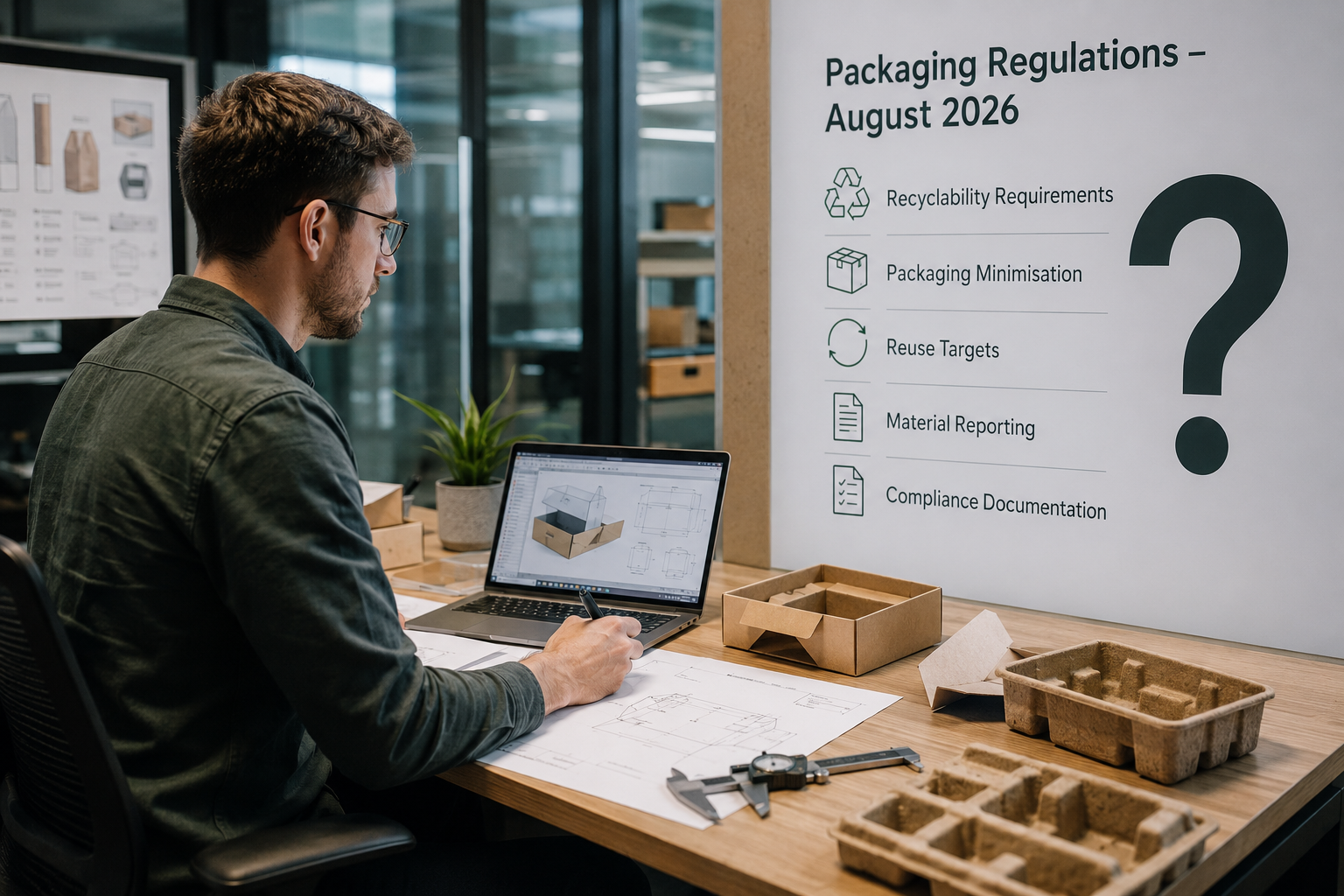
However, from 12 August 2026, a major shift will take place across Europe.
With the application of the Packaging and Packaging Waste Regulation (PPWR), businesses will increasingly need to demonstrate that their packaging complies with specific requirements through documentation, testing, and technical evidence.
In other words, sustainability claims alone will no longer be enough. Companies will need proof.
What Is Changing Under PPWR?
The new PPWR introduces requirements designed to improve packaging sustainability, recyclability, and transparency throughout the supply chain.
The regulation will impact manufacturers, brand owners, importers, distributors, and packaging suppliers operating within the European market.
While implementation details will continue to evolve, several key principles are already clear.
Declaration of Conformity
Each packaging type will need to be supported by a Declaration of Conformity.
This documentation is intended to demonstrate that the packaging complies with applicable European requirements and can be made available when requested by customers or authorities.
For many businesses, this represents a significant shift toward greater accountability and traceability.
PFAS Restrictions for Food-Contact Packaging
PFAS substances have become an increasingly important topic within packaging regulations.
Packaging intended for food contact will need to comply with the applicable PFAS restrictions and limits established under European legislation.
As a result, companies should review their packaging materials and work with suppliers that can provide transparency regarding material composition and compliance.
Recyclability Will Need to Be Demonstrated
The PPWR places strong emphasis on packaging recyclability.
Packaging should not only be designed with recycling in mind but should also be capable of meeting the relevant recyclability criteria.
This means businesses may need access to technical data, material specifications, and supporting evidence to demonstrate compliance.
Minimization of Packaging Materials
Another important principle of the regulation is packaging minimization.
Weight, volume, and material usage should be reduced to the minimum necessary to ensure product protection, functionality, and logistics performance.
This encourages smarter packaging design while helping reduce unnecessary waste throughout the supply chain.
Technical Documentation Matters
One of the most significant changes introduced by PPWR is the increased importance of technical documentation.
Companies may need to support their claims with:
- Material specifications
- Compliance declarations
- Test reports
- Recyclability information
- Technical assessments
- Supplier documentation
Having this information readily available can help businesses respond efficiently to customer requests and regulatory requirements.
Market Expectations May Arrive Before Enforcement
In many cases, large retailers, brands, and procurement teams are likely to begin requesting compliance information before the regulation is fully enforced in practice.
As sustainability requirements become part of supplier qualification processes, documentation may become a competitive advantage rather than simply a regulatory obligation.
Businesses that prepare early may find themselves better positioned to meet future customer expectations.
Looking Ahead
The PPWR marks a transition from sustainability claims to demonstrable sustainability.
From 2026 onward, packaging decisions will increasingly be evaluated not only on cost, design, and delivery performance but also on compliance, transparency, and evidence.
Companies that invest today in compliant materials, PFAS-free solutions, recyclability, and robust documentation will be better prepared for the future of packaging in Europe.
At Pakeling, we believe that successful packaging is no longer just about what you say—it is about what you can prove.
Let us know how we can help.